Mapping and evaluating dRTP’s contributions to computing skills’pedagogies
Preliminary results

Dr. Carlos Cámara-Menoyo (PI)
Senior Research Software Engineer, Centre for Interdisciplinary Methodologies (University of Warwick), SSI Fellow

Dr.Timothy Monteath (Co-I)
Assistant Professor, Centre for Interdisciplinary Methodologies (University of Warwick)
The challenge: training DRCs
We are seeing a computational turn in research, as seen in a
growing number of research that relies on data or research software (Crouch et al. 2013),
adoption of computational methods by fields that didn’t traditionally use them (e.g. computational social sciences, digital humanities…)
growing importance of OpenScience and expectation to manage data and outputs following FAIR principles,
growing number of infrastructure and professionals needed for its delivery,
the advent of AI (adding a new level of complexity).
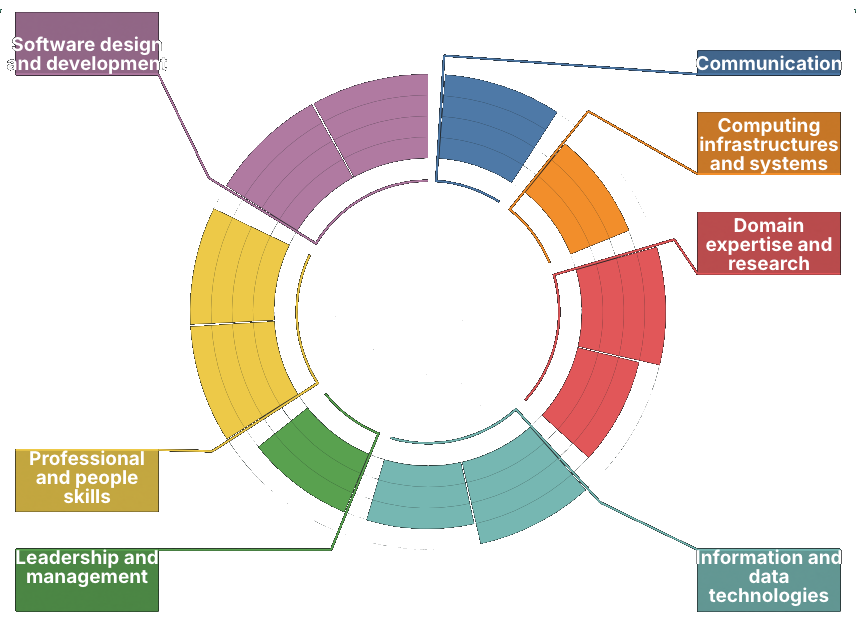
This requires a broad set of skills -Digital Research Competencies (DRC)- that need to be learnt and taught.
So we wondered…
If training is needed, and RSEs are not doing it, who are the professionals filling this gap?
If multiple professionals are doing it: does the training differ based on their backgrounds?
And more broadly: how are DRC being delivered and what are their key defining factors?
Our research
“Mapping and evaluating dRTP’s contributions to computing skills and pedagogies in Higher Education” is a project funded by the UKRI’s DisCouRSE Network+ and aims to map and analyse the provision of digital research competencies (DRC) which are led by or involve dRTP’s across Higher Education institutions in the UK.
The research acknowledges and complements existing competency frameworks like DIRECT but examines the material conditions of training delivery instead of learning needs.
Research questions include:
How are dRTPs engaging in the teaching of Digital Research Competencies?
What are the methodologies and technologies used to deliver the training? How are decisions on training delivery made?
How is the training influenced by matters such as type of professional, career stage, background, pedagogical approaches, trends, availability, licences or teachers’ beliefs?
Are there any approaches that are more frequently used for specific audiences or cases?
 This work was supported by the DisCouRSE Network+, which received funding through the UKRI Digital Research Infrastructure Programme
Survey
People
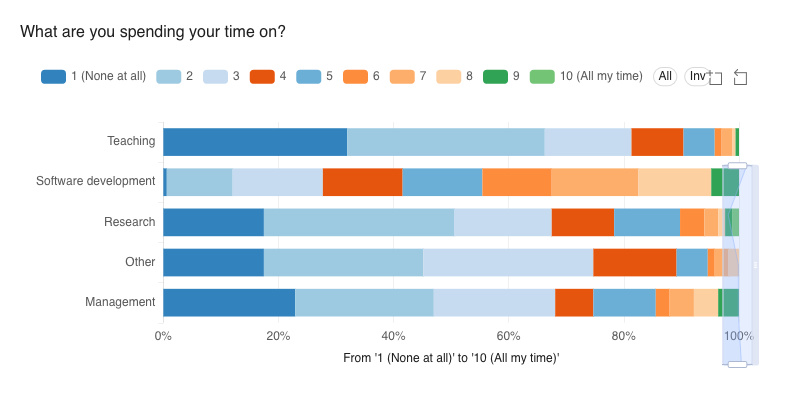
Who are involved? What are their job titles?
How are they involved in the teaching?
Do they have any pedagogical background?
What are their beliefs in relation to tech and pedagogy? (e.g. stance as a teacher, importance of opensource, AI, licences…)
Training and pedagogies
What is being taught?
What formats and delivery mode are used?
What are the key factors influencing how the training is delivered?
Infrastructure needed
Challenges

Warning
At the time of writing, we have received 41 responses, covering 34 trainings. We need more responses!